When A Complete Summary
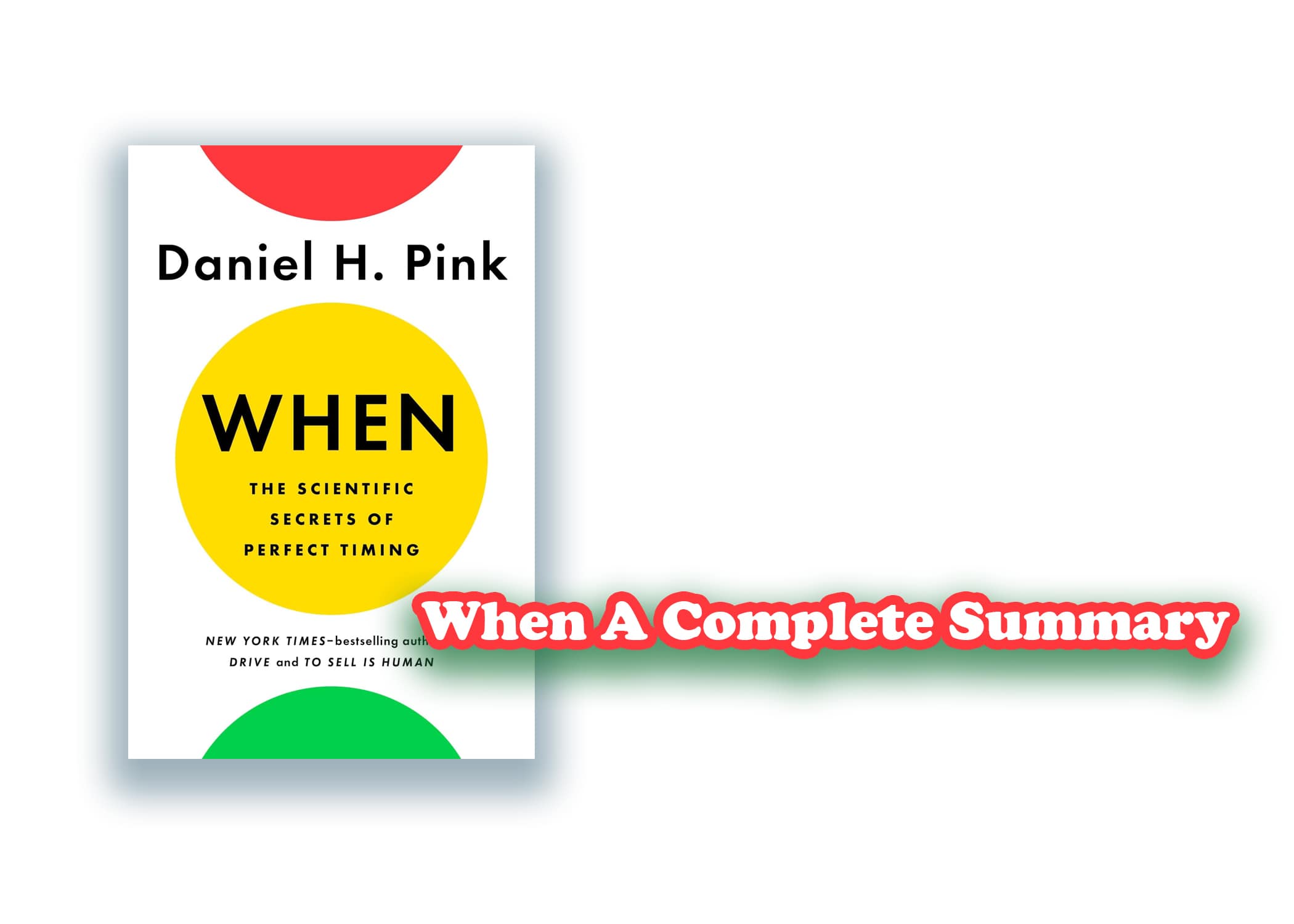
When A Complete Summary The Scientific Secrets of Perfect Timing
Why Timing Matters More Than We Think
Have you ever wondered why some days you feel unstoppable while on others you can barely focus? Or why certain meetings seem more productive in the morning and others in the afternoon? Daniel H. Pink’s best-selling book “When: The Scientific Secrets of Perfect Timing” explores exactly that — how timing shapes success, happiness, and health
Unlike most books that tell us what to do or how to do it, When focuses on when to do things. Pink combines research from psychology, biology, and economics to show that good timing isn’t just luck — it’s a science
1. The Hidden Pattern of the Day
Pink starts by explaining that our days follow a predictable pattern — a rhythm that influences our mood, performance, and even decision-making quality
He divides a typical day into three stages:
| Stage | Description | Best Activities |
|---|---|---|
| Peak | Energy and alertness are highest | Analytical tasks, focused work, decision-making |
| Trough | Energy dips, focus weakens | Administrative work, routine tasks |
| Recovery | Mood improves but focus is lower | Creative work, brainstorming, social interaction |
Most people — especially those who wake up early or have a standard schedule — hit their peak in the morning, trough in the early afternoon, and recovery in the late afternoon or evening
However, night owls experience this pattern differently — their peak often comes later in the day. Understanding your personal rhythm is key to planning your most important tasks effectively
Takeaway:
➡️ Match your tasks to your daily energy curve
Do deep work during your peak, small tasks during your trough, and creative thinking during your recovery
2. The Science of Beginnings
Pink explains that how we start things — whether it’s a day, a project, or a life chapter — strongly affects the outcome
a) Fresh Starts Matter
Moments like the first day of the year, birthdays, or Mondays trigger what Pink calls the “fresh start effect.” These moments make us psychologically separate our past self from our present self, allowing motivation and clarity to rise
b) The Power of First Impressions
In any social or professional situation, beginnings create strong impressions. Pink reminds us that our brains make rapid judgments, so it’s crucial to start interactions and projects with clarity and confidence
c) Starting Right
Beginnings set the tone for everything that follows. Whether it’s the first day of school, a new job, or even the opening of an email — getting the start right builds momentum and credibility
Takeaway:
➡️ Use fresh start moments to reset goals and begin with intention
➡️ Make the first impression count — both emotionally and practically
3. The Midpoint Slump and How to Overcome It
In the middle of any journey — be it a project, a career, or even a day — motivation often fades. Pink calls this the “midpoint slump”
a) The U-Shape of Motivation
Studies show that in long-term projects, motivation starts high, dips in the middle, and rises again toward the end — forming a U-shaped curve
Pink compares this to how people’s moods drop mid-day and recover later
b) The “Uh-Oh Effect”
The midpoint can also act as a wake-up call. For instance, sports teams often perform better in the second half if they were slightly behind at halftime. The small deficit sparks urgency
c) Strategies to Beat the Slump
- Set mid-point goals — break big projects into halves or quarters
- Celebrate small wins — acknowledge progress to stay motivated
- Revisit your “why” — remind yourself of the purpose behind your task.
Takeaway:
➡️ Treat the midpoint not as a drag but as a trigger for renewed energy
4. The Science of Endings: How to Finish Strong
Endings shape how we remember experiences. Pink argues that how something ends matters more than how it begins
a) The “Peak-End Rule”
Psychologists found that people remember experiences based on two points:
- The peak (the most intense moment)
- The end (how it concluded)
So, even if an event was mostly unpleasant, a strong positive ending can transform how we recall it
b) The Power of Closure
Endings create meaning. Whether it’s the final day of a job, a graduation, or the closing scene of a movie, we look for coherence and emotional satisfaction
c) Finish with Purpose
Pink encourages finishing tasks, days, and life chapters intentionally — by expressing gratitude, celebrating achievements, or reflecting on lessons learned
Takeaway:
➡️ Endings leave emotional imprints — make them meaningful and positive
5. The Importance of Breaks
Contrary to the modern culture of hustle, Pink presents solid scientific evidence that taking breaks boosts productivity and creativity
a) The Myth of Constant Focus
Our brains can’t stay at full focus for hours. Continuous work leads to diminishing returns, especially after the midday trough
b) The Perfect Break
Pink identifies features of effective breaks:
- Short (10–15 minutes)
- Regular (every 60–90 minutes)
- Social (with others, if possible)
- Active (include movement)
- Disconnected (no screens!)
c) The “Micro-Restoration” Effect
Even brief breaks — like walking outside or stretching — restore energy and improve accuracy, mood, and engagement
Takeaway:
➡️ Don’t skip breaks. They’re not a waste of time — they’re a strategic reset
6. Group Timing: The Power of Synchronization
Timing isn’t just personal — it’s social
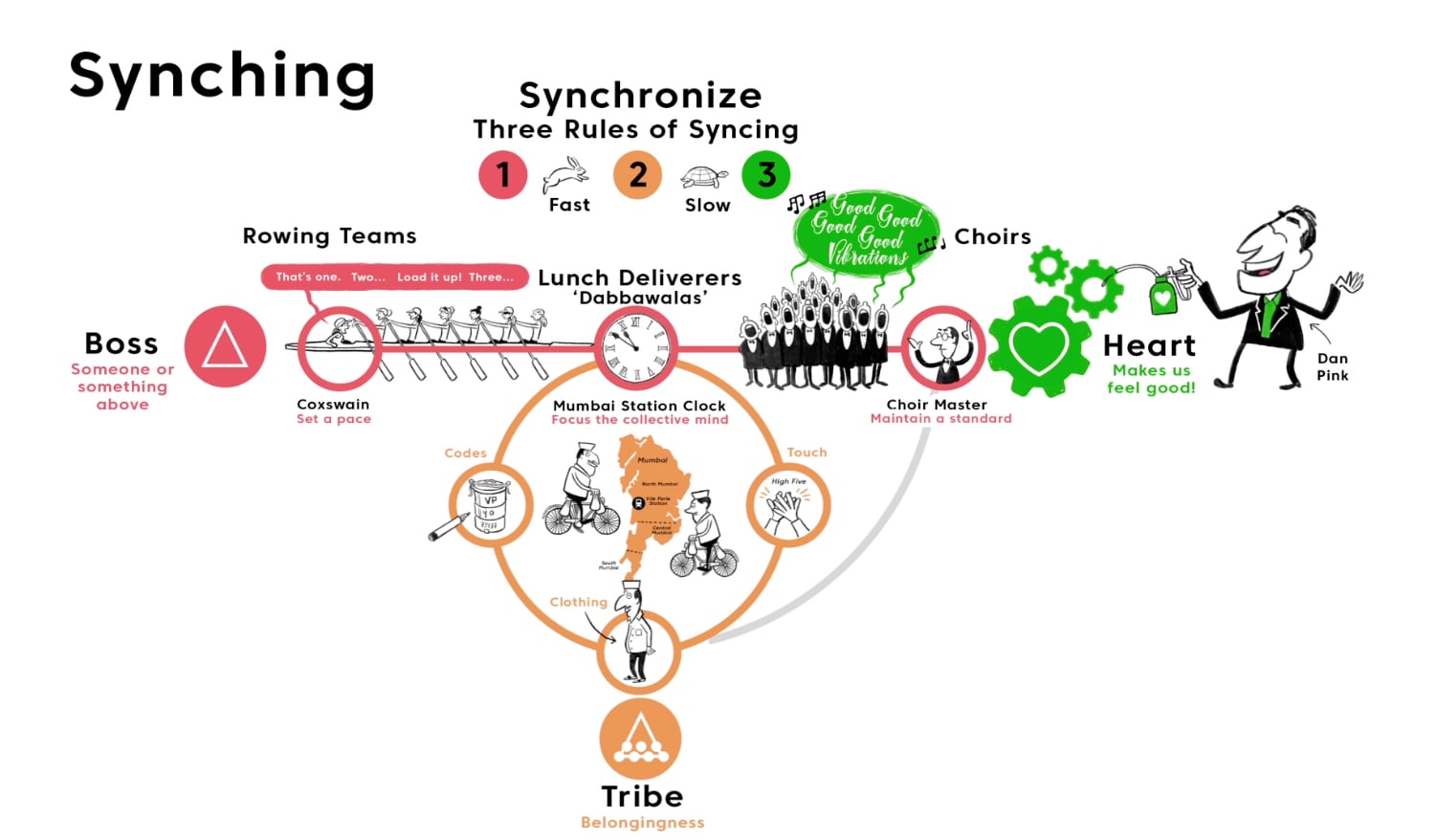
Pink explains how synchronizing with others can amplify success in teams, relationships, and communities
a) Synchrony Builds Trust
When people move, speak, or act in sync — like in music, sports, or even meetings — their cooperation and empathy rise
Think of marching soldiers, dance troupes, or rowing teams — synchrony fosters unity
b) The Three Building Blocks of Synchrony
- Belonging — feeling part of a group
- Doing — participating in shared activity
- Believing — having a common purpose or goal
c) Practical Synchronization
- Use rituals (like morning check-ins)
- Align team energy with natural rhythms
- Encourage shared breaks and collective celebrations
Takeaway:
➡️ Synchrony multiplies impact — timing with others is a force multiplier
7. Timing and Decision-Making
When we make decisions also determines their quality. Pink shows that judgment fluctuates through the day — especially in high-stakes environments
a) The “Morning Morality Effect”
Research shows that people tend to be more ethical and careful in the morning and more prone to shortcuts in the afternoon
This pattern is linked to fatigue and self-control depletion
b) Timing in Medicine and Justice
Studies revealed shocking insights:
- Doctors are more likely to prescribe unnecessary antibiotics in the afternoon
- Judges grant fewer paroles before lunch (when hungry and tired)
c) Practical Application
- Schedule important decisions early in the day
- Avoid making commitments or financial decisions during your trough
- Use breaks to refresh before critical thinking tasks
Takeaway:
➡️ Good timing prevents bad decisions
8. Applying “When” to Real Life
Pink’s insights are only useful if we can apply them. He offers practical strategies for work, health, relationships, and creativity
a) Work
- Schedule deep work (like writing or coding) during your peak
- Do routine tasks (like emails or data entry) during the trough
- Use recovery time for brainstorming or networking
b) Health
- Exercise in the afternoon for better performance and lower injury risk
- Take short walks after meals to stabilize mood and energy
- Sleep and wake at consistent times to reinforce your natural rhythm
c) Relationships
- Plan important conversations when both parties are alert
- Celebrate endings — like finishing a project — together
- Take synchronized breaks with friends or colleagues
d) Creativity
- Use the recovery phase (late afternoon/evening) for creative thinking
- Step away from problems — breakthroughs often happen after pauses
Takeaway:
➡️ Align your activities with your biological and emotional timing for peak performance
9. Daniel Pink’s Practical Tools
Pink ends the book with actionable tools and assessments
a) The “Chronotype” Test
He provides a quiz to determine if you’re a Lark (morning type), Owl (night type), or Third Bird (in-between).
Knowing your type helps you optimize when to work, eat, sleep, and exercise
b) The “Daily When” Planner
Pink suggests creating a “when map” — a personalized schedule based on your natural energy pattern
Example:
| Time | Energy Level | Best Use |
|---|---|---|
| 6–9 AM | High | Focused work |
| 12–2 PM | Low | Routine work |
| 4–6 PM | Moderate | Creative work |
| 8–10 PM | Variable | Relaxation / reflection |
c) The “Break List”
Instead of a to-do list, Pink proposes a “break list” — intentional pauses to keep your energy balanced
10. Final Thoughts: The Power of Knowing “When”
When is a book that changes how we think about time — not as something to manage, but to master.
Daniel Pink gives us permission to work with our natural rhythms instead of fighting them. By choosing the right moments to start, pause, and finish, we can:
- Work smarter (not harder)
- Improve relationships
- Stay healthier and happier
- Create better memories and meaning
The secret isn’t more hours — it’s better-timed hours
Consulotion
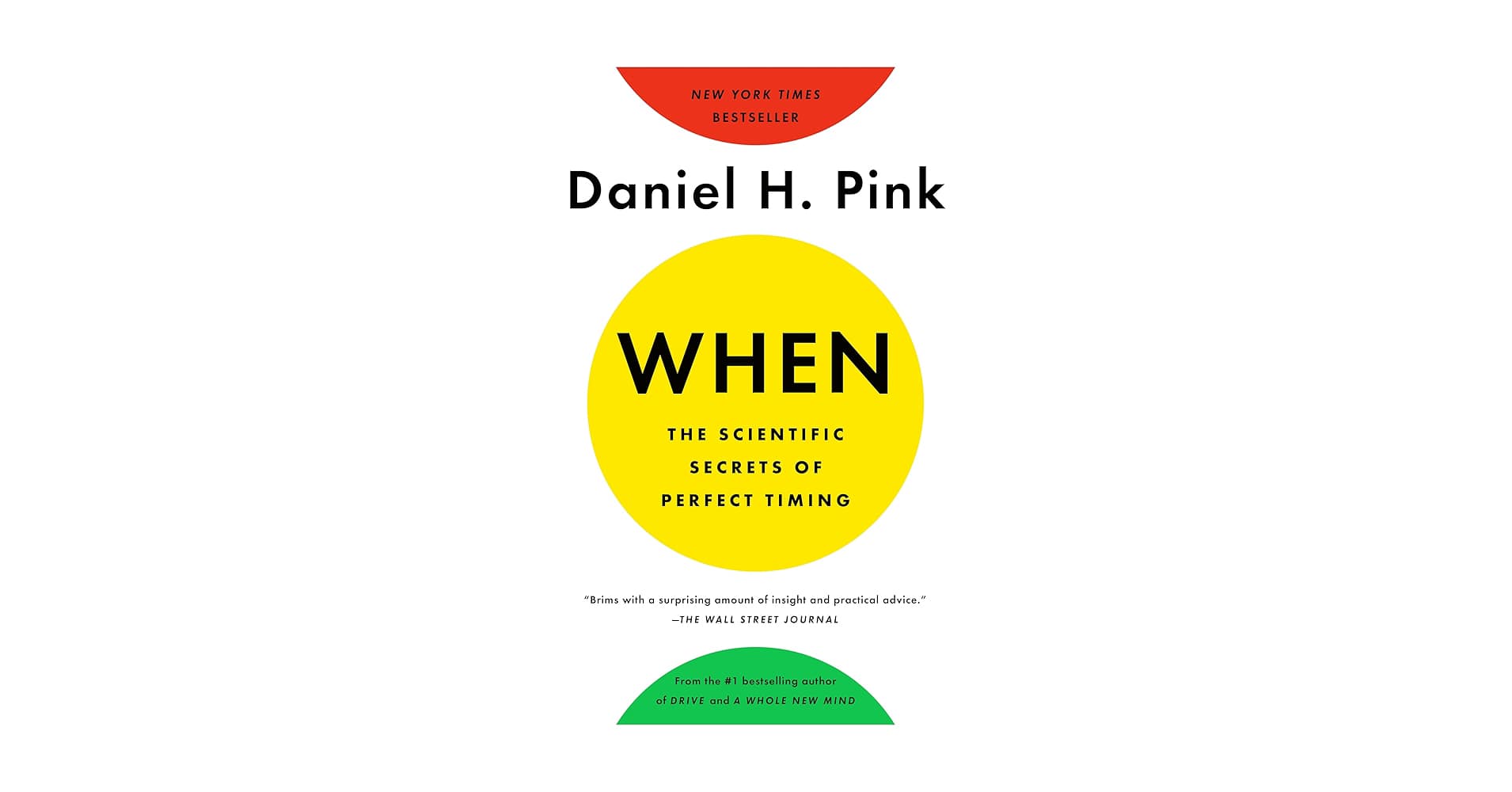
In this How2 article, we reviewed the book When by Daniel H. Pink. This book is a New York Times and Amazon bestseller, using a rich collection of psychological, biological, and economic research. The book shows how we can use hidden and new patterns to create our ideal timeline. How can we turn a shaky start into a fresh start? Why should we avoid going to the hospital in the evening? Why is singing with others as good for us as exercising? When is the ideal time to quit a job, change careers, or get married? Almost everyone knows that timing is everything, but many don’t know much about this phenomenon itself, and in fact this trick. Our lives are a series of successive decisions about “when”; when to start a business? When to add a class to our schedule? When should we take our relationship with another person seriously? We make these decisions based on our intuition and hunches. This book is a fascinating and readable account of how to create a richer and more fulfilling life. Daniel H. Pink combines the latest research and timekeeping information with engaging and informative stories and practical and applicable advice to give readers deep and compelling insight. He is the author of “Drive” and “TO SELL IS HUMAN.” Daniel H. Pink is a leading thinker in the field of success and business who is said to be quickly becoming an international master. He has identified scientific timekeeping tricks to help us be more successful in work and life.
Read the book when; Who do we recommend Scientific Tricks for Excellent Timekeeping to?
We recommend this book to those who love to study timekeeping and its connection to success in work and life.
We hope you enjoyed reading this article. To see more articles, visit the newsletter section
To support this content, help it become more visible by liking it or sharing it on social networks